Lifts to Lofts: How London's Grand Department Stores Got a Second Life
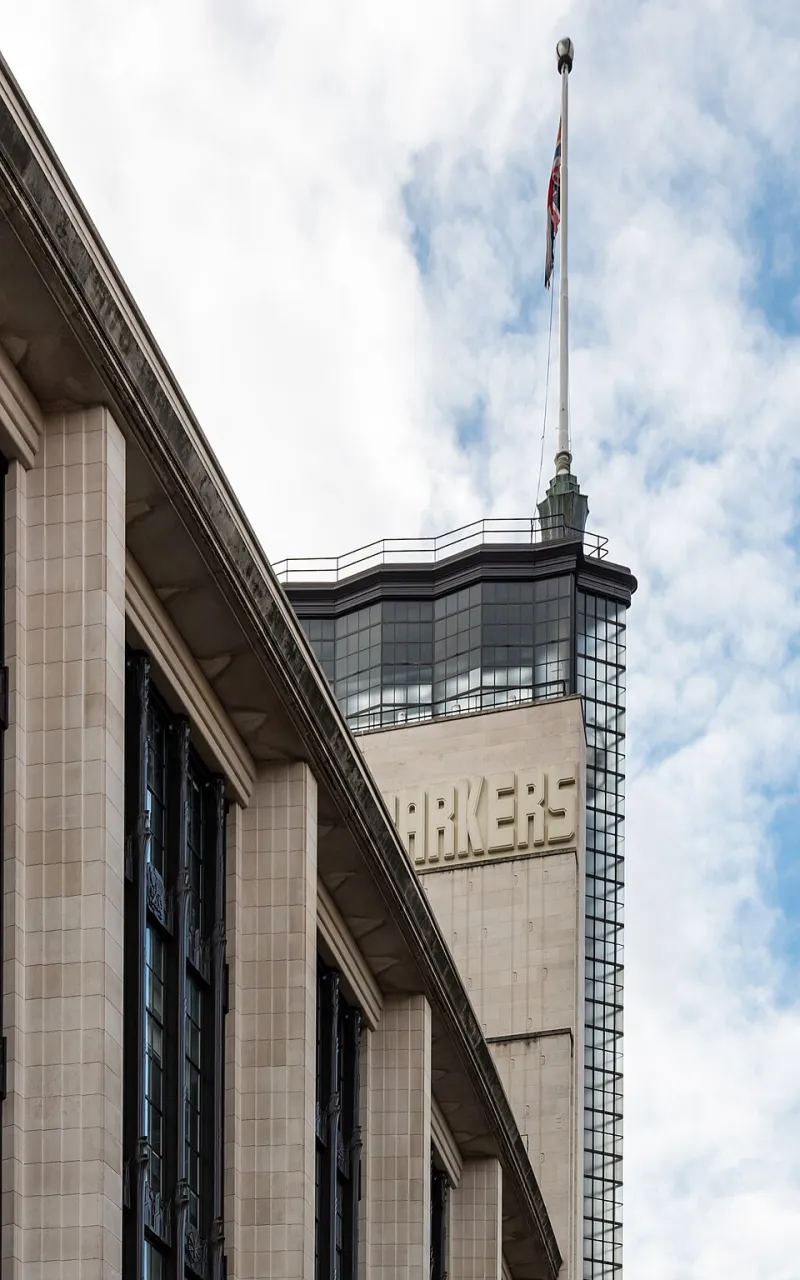
Photo: Dietmar Rabich, CC BY-SA 4.0, via Wikimedia Commons
On a damp November afternoon, the kind that makes Oxford Street look like a blurred photograph, it helps to stop looking in the windows and start looking up. Above the phone shops and candy stores, above the scaffolding and the closing-down banners, London still carries the bones of its grand old department stores. Stone carvings, deep cornices, goods entrances wide enough for a horse and cart, rooftop additions that look like afterthoughts. These buildings sold everything once. Now they sell something else: flats, gym sessions, hotel nights, pints, salvation, a place to wait for a train.
The question worth asking in 2026 is not whether the department store is dead. It is what these survivors tell us about the high street we actually have. The answer is rarely neat. London's old shops have been chopped, converted, extended and rebranded, but they have not been erased. They are a useful reminder that the city rarely demolishes its retail past. It just finds a new tenant.
The pleasure of looking up
A good winter walk through these buildings is an exercise in reading layers. At street level, everything is temporary: pop-ups, vape shops, delivery bikes. Look higher and the original architecture is still doing its old job, announcing seriousness and solidity. Department stores were designed to make you feel small and trustworthy in equal measure. They had grand entrances for the public, discreet side doors for deliveries, and upper floors that expanded as the business grew.
If you can get inside, look for the old lifts. Many have been replaced, but the shafts and the decorative doors sometimes survive. Look, too, at the rooftop extensions. They often began as staff canteens, storage or tea rooms, and now they are penthouses or hotel bars. The building's history is written in what was added when nobody expected the shop to last forever.
Kensington High Street: from drapery to groceries and roof gardens
Start west. The old Barkers building on Kensington High Street is a masterclass in retail reinvention. Barkers was once a proper full-service department store, all mahogany counters and deferential assistants. Today the lower floors are a supermarket and the upper floors are offices; the stone façade still carries the confident, slightly imperial look of a shop that believed in itself. It is not a museum. It is a working building that happens to have kept its manners.
A few doors along, the former Derry & Toms building tells a stranger story. Derry & Toms is remembered by Londoners of a certain age for its roof garden, a surprising pocket of flamingos and formality above the sales floor. The shop closed decades ago, but the building has kept its theatrical streak. The roof garden still exists in some form, and the building now holds offices and retail. On a clear winter day, the whole block feels like a lesson in how to reuse glamour without pretending the past is still trading.
Bayswater: Whiteleys gets a hotel habit
Head towards Bayswater and the old Whiteleys building, once the anchor of Queensway, has become something altogether more polished. Whiteleys was a department store with a reputation for variety, then a shopping centre that never quite settled. In 2026, the site has been reimagined as a hotel-and-residences complex, with the old façade and some of the interior volumes kept as a reminder of the shop's scale. It is the most expensive kind of afterlife: the department store as luxury amenity.
Stand outside and you can still read the original plan. The wide frontage, the grand entrance, the sense that this was a place people arrived at rather than passed through. The new version trades on that same arrival. It is a useful example of how London's old retail buildings become neighbourhood anchors again, not by selling stock, but by selling atmosphere.
Victoria: the Army & Navy goes residential
Victoria is where the department store afterlife becomes almost domestic. The old Army & Navy Stores building on Victoria Street, once a cathedral of practical goods for officers and their families, has been carved into flats. The name still clings to the building, and the scale is still unmistakably retail. But the windows now look out onto a street that has changed around them.
This is the quietest kind of conversion. There is no grand hotel lobby or pub sign to announce the change. The building simply became housing, which is perhaps the most London outcome of all. It reminds you that the high street is not only a place for shopping. It is a place for living, working and passing through, and the old shops are big enough to hold more than one of those things at once.
Clapham Junction: Arding & Hobbs pulls a pint
Cross the river and the tone changes. Arding & Hobbs in Clapham Junction was a proper local department store, the kind that sold school uniforms, bedding and kitchenware to generations of south London families. It later became a Wetherspoon pub, which is a very different sort of institution: cheap pints, laminated menus, no personal shoppers. The building still has the old bones, though, and the name still sits above the door.
It is a good example of how these buildings can serve a neighbourhood without pretending to be grand. The department store was never only for the rich. It was a place where ordinary people bought ordinary things. A pub is not the same, but it is not nothing. It keeps the lights on and the doors open.
Oxford Street: the waiting room
Oxford Street is where the afterlife gets messier. The former Debenhams building at 334-348 Oxford Street has been waiting for its next act for years, its future tied up in planning and economics. The old D H Evans building, later a House of Fraser, closed in 2022 and is still negotiating its own reinvention. These are the gaps in the story: big, awkward buildings that nobody quite knows what to do with.
In 2026, the high street is less a place to buy a coat and more a place to meet, eat, work and wander. The old department stores were built for a world of formal shopping. Converting them takes time, money and a certain amount of imagination. When it works, it works beautifully. When it does not, the building sits there, solid and patient, while the city decides.
Brixton: the survivor
Not every old shop has become something else. Morleys in Brixton is still trading, a family-run department store that has somehow held on while the giants around it fell. It is not a relic. It is a working shop, with counters and staff and a slightly old-fashioned sense of service. Walking past it after a tour of conversions is oddly moving. It proves that the department store is not a lost cause; it is just a harder business than it used to be.
How to read a former department store
You do not need a guidebook. Start with the façade and ask what it was trying to say. Look for carved monograms, old shop signs, and the ghosts of lettering above the modern fascia. Check the side streets for goods entrances, which are often the most honest parts of the building. Look at the roofline: a later extension usually means the shop was doing well, or that the owner ran out of space and simply built upwards.
A good winter walk takes in Kensington High Street, Bayswater, Victoria and Clapham Junction, with a detour to Brixton if you have the time. Go early, when the light is low and the windows are still lit. Take a flask. Look up. The old shops are still there, holding the shape of the high street we lost, and the shape of the one we are still making.