Cast-Iron Ciphers: A Letter-Box Crawl Through Three London Villages
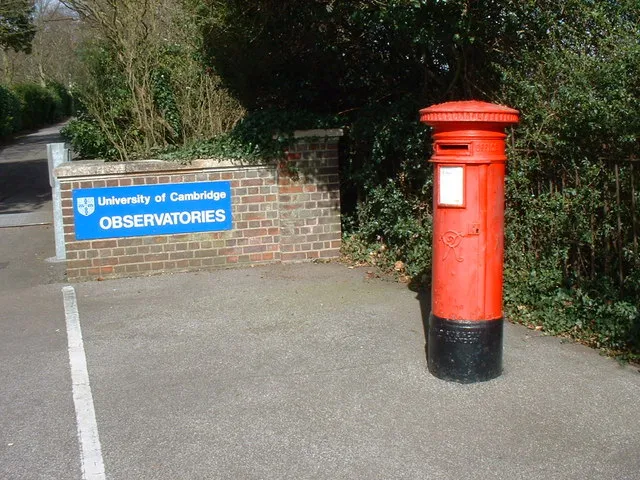
Photo: Mark Hurn, CC BY-SA 2.0, via Wikimedia Commons
London's red pillar box is the city's most dependable public sculpture. It is also a database. Every curve, slot and raised line of lettering is a date stamp, a maker's signature, a small civic boast. The boxes are not just photo props for tourists; they are the street furniture equivalent of a parish register. On a damp Saturday in November 2026, I set out to read three London villages through their postboxes: Westminster, South Kensington and Hampstead. The plan was simple. Walk, look down, decode, repeat. End at a pub with a postcard.
Westminster: The Cipher School
Start at St John's Smith Square. The grid of streets here still carries the ghost boundaries of the old Westminster postal district, and the boxes are thick on the ground. The first thing to learn is the cipher. That is the royal monogram on the door: VR for Victoria, GR for George, E II R for Elizabeth II, C III R for Charles III. Edward VIII boxes are the unicorns. He abdicated before many were cast, so an EVIIIR box is a genuine find.
On Lord North Street, a GR box stands outside a row of Georgian townhouses. The paint is thick, the slot is worn, and the base carries a maker's mark almost rubbed away. This is the pleasure of the hunt: not the pristine museum piece but the working box with a century of hands on it. Walk east towards Horseferry Road and you will pass a cluster of later boxes, including the first C III R examples to appear in central London. They look almost identical to their predecessors, which is the point. The design is a rare thing: a piece of state infrastructure that the public actually likes.
South Kensington: The Foundry Roll Call
Take the District line to South Kensington and the mood changes. Here the boxes are less about the crown and more about the foundry. Look low on the door or the base for a name: Handyside of Derby, McDowall Steven of Glasgow, W T Allen. These are the birth certificates. A Handyside box from the 1870s has a particular weight to it, a certain thickness at the lip. A McDowall Steven box often has a softer cast. You do not need to be an antiques dealer to enjoy this. You just need to crouch.
The route: Exhibition Road, Thurloe Square, Onslow Square. Outside the V&A, a box stands in the shadow of the museum's stone, and it is easy to miss because everyone is looking at the building. Turn into Thurloe Square and you will find a wall box set into brick, the shy cousin of the freestanding pillar. Wall boxes were made for narrow pavements and tight corners. They are also a useful reminder that the postal network was designed for walking, not driving. The box is a piece of pedestrian infrastructure.
Hampstead: The High Ground for Oddballs
The Northern line to Hampstead feels like a different city. The pavements are narrower, the walls are older, and the boxes are stranger. Hampstead is where you find the oddballs: wall boxes, lamp boxes, and if you are lucky, a Penfold. The Penfold is the hexagonal box designed by John Penfold in the 1860s. It is the rare butterfly of the letter-box world. Most were replaced, but a few survive. Do not expect to find one on every corner. That is the point.
Walk from the station up to Holly Bush Hill and then across to Flask Walk. The boxes here are often set into garden walls, half-hidden by ivy. One double-aperture box serves two streets at once, a small piece of postal logistics that feels almost decadent. End at The Flask or The Holly Bush. Both are proper pubs with proper fires. Buy a postcard from the shop on Flask Walk, write it at the table, and post it in the box you have just spent ten minutes admiring. The card will arrive with a sorting office stamp, which is the whole point.
The Practical Route
Do this as three separate loops, not one long march. Westminster: 45 minutes, starting at St John's Smith Square and ending near Horseferry Road. South Kensington: 60 minutes, starting at the V&A and ending at Onslow Square. Hampstead: 90 minutes, starting at the station and ending at The Flask. All three are best on a dry weekday morning, when the light is low and the streets are quiet. Take a small torch for reading maker's marks in winter. Do not obstruct the slot. These boxes are still working.
What the Lettering Tells You
The cipher is the headline, but the small print is the story. A box with a late Victorian cipher and a 20th-century door has been repaired, not replaced. A box with a modern lock and an old base has survived a hundred years of weather and reorganisation. The maker's mark tells you where it was cast. The royal cipher tells you when. The wear tells you how busy the street has been. Put together, they are a mini history of the neighbourhood: the years of heavy mail, the years of decline, the years of revival.
London is often described as a city of villages. The postbox is the village noticeboard that never learned to speak. It just stands there, red and patient, waiting for you to read it. Take a walk. Bring a postcard. The box will do the rest.