Where the Street Remembers: A Walk Through London's Rogue Memorials
Blue plaques are a closed shop. You need to have been dead for twenty years, be of national importance, and survive a committee that meets a handful of times a year. Which is why the memorials that actually stop you in the street are usually the ones nobody approved: the chalked names, the stencilled dates, the hand-painted panels under railway arches that get refreshed every few months by people who knew the person being remembered.
This walk runs roughly three miles from Bethnal Green to Wapping, taking in Whitechapel and Shadwell on the way. Allow two and a half hours at a clip, or four if you stop for a pint and a bagel. It is not an official trail, there is no app, and some of what follows may have been painted over by the time you get there. That is the point.
Bethnal Green: the stairway and the stencil
Start at Bethnal Green station and walk east along Roman Road. Before you get to the market, look for the Stairway to Heaven memorial on the corner of Cambridge Heath Road: a teak sculpture with 173 points of light, commemorating the 173 people who died in the 1943 crush on the station stairs. It is a proper memorial now, but it began as a campaign by survivors and families, not as a plaque from on high. Read the names. Then notice the small things around its base: ribbons tied to railings, a few stones, a wind-chime. Nobody official put them there.
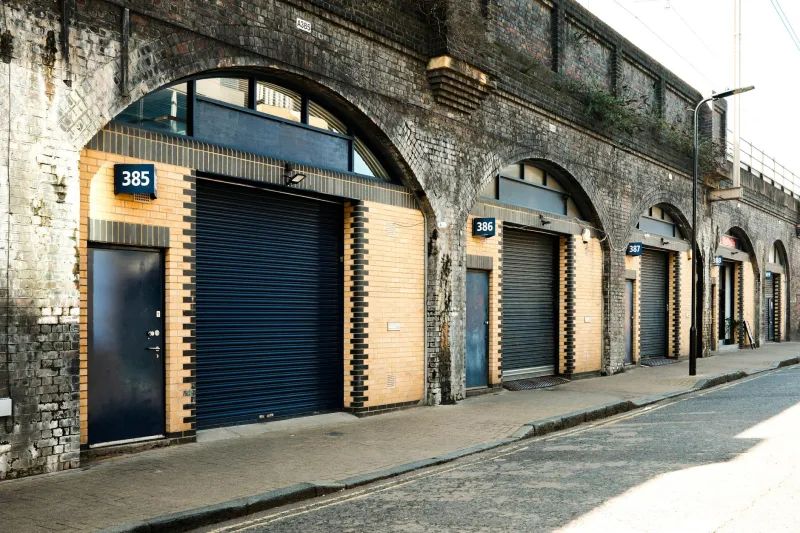
Carry on to Viaduct Street and the railway arches. This is where the walk gets properly unofficial. The arches here have become a rolling wall of remembrance: stencils of names and dates, spray-painted football colours, a face in silhouette, a line of poetry that has been half-buffed away and half-repainted. Some commemorate local people who died young. Some mark anniversaries. Some are simply the work of someone who wanted a mate to be seen. The paint is layered like sediment, and every few months a new layer goes on top.
Whitechapel and Shadwell: the mural that argues back
Cut south through Stepney and pick up Cable Street. On the west wall of St George's Town Hall is the Cable Street mural, painted in the late 1970s and early 80s, and it is not a plaque. It is an argument in paint: the Battle of Cable Street in 1936, when local people blocked a fascist march, rendered in bold figures and banners. It is community-funded, community-maintained, and it tells you more about the political memory of this stretch of London than any bronze disc could.
From there, head down Brick Lane and Cheshire Street. Keep an eye out for the hand-painted shopfronts: a bagel bakery naming a father and son, a fabric shop with a founder's name in gold leaf, a pub sign repainted by a regular. These are memorials by accident, in some cases, but they are memorials all the same. The East End has a long tradition of painting its own history on its own walls.
Wapping: arches, water and the noose
Finish along Wapping Wall and the cobbles by the river. Execution Dock is here, where pirates and mutineers were hanged until the early nineteenth century, and the nearby Captain Kidd pub takes its name from one of them. The Prospect of Whitby has a noose hanging over the river, a memorial that predates the word. But the better stop is the arches on Cinnamon Street, where a shifting layer of tributes has built up over years: names of dockers, names of boxers, names of people whose significance is entirely local. You will not find them in any heritage listing. You will find them because someone cared enough to paint them.
Why the rogue plaques matter
An English Heritage plaque tells you what the nation thinks. A chalk name above a pub door tells you what the street thinks. Unofficial memorials are maintained by people, not institutions, which means they are messy, partial and alive. They decay. They get repainted. They reflect whoever is living on that road now, not whoever was deemed important a century ago. That is why they often say more about a neighbourhood than its grandest monument: they are a conversation, not a proclamation.
Walk it
Start at Bethnal Green Underground (Central line) and finish at Wapping Overground. The route is roughly Bethnal Green Road, Roman Road, Cambridge Heath Road, Cable Street, Wapping Wall. It is flat, mostly pavement, and best done on a dry Saturday. Pubs en route: The Pride of Spitalfields, The Captain Kidd, The Prospect of Whitby. Etiquette: do not photograph people without asking, do not add to shrines that are not yours, and remember that some of these walls are on private property. Look, read, and move on.
By the time you reach the river, you will have passed maybe a dozen memorials that no guidebook lists. That is the walk. The street remembers in its own handwriting, and the handwriting is worth reading.