At Knee Height: A Wall Box Safari Through Bloomsbury and Clerkenwell
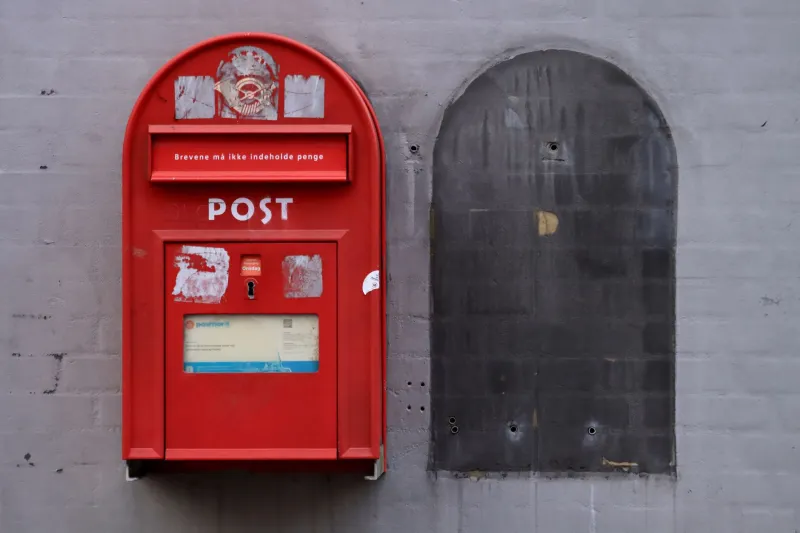
London is full of things you look past. The wall box is the most democratic of them: bolted at shin height, painted a red that has faded to a kind of embarrassed burgundy, and carrying, if you crouch, a whole royal succession in miniature. Most of us walk by. This is a walk for the ones who don’t.
First, learn the alphabet
Before you go, memorise five sets of letters. They are the whole trick.
VR is Victoria Regina (1837–1901). ER is the trap: it means Edward Rex (Edward VII, 1901–10) or Elizabeth Regina (Elizabeth II, 1952–2022). The box’s age, the typeface and the shape of the crown give it away. GR covers two Georges: George V (1910–36) and George VI (1936–52). CIIIR is Charles III Rex, which has been appearing on new boxes since 2022.
There is also the anonymous box: made between roughly 1879 and 1887, with no cypher at all, after a disagreement between the Post Office and the royal household. A small republican blush in cast iron. They are the rarest thing on this walk.
Look, too, for the maker’s plate—often inside the door or on the frame. Handyside of Derby is common; other names are scattered about. The plate is the box’s signature, and it is usually the only bit that hasn’t been repainted into oblivion.
Why wall boxes matter
Pillar boxes get the postcards; wall boxes get the history. They were cheaper and quicker to install, and in many neighbourhoods they predate the pillar box. London’s survivors cluster where brickwork survived the Blitz and the developers—which is to say, in odd pockets of Bloomsbury and Clerkenwell where the terraces still run in an unbroken line.
The walk: Russell Square to Clerkenwell
About 1.5 miles, flat, 50 minutes without stops. Allow two hours with stops and a coffee. Start at Russell Square tube and drift east; finish near Clerkenwell Green.
Stop 1: Marchmont Street, the anonymous one
Leave the tube and head south. On Marchmont Street, look for a box set into the wall of a terrace rather than standing on the pavement. If you find one with no letters at all above the slot, you have found the oldest thing on the walk: an anonymous box, 1879–87. Crouch. Check the maker’s plate. Then check the slot—narrow, because letters were smaller and the sorting machines were crueller.
Stop 2: Judd Street, the Victorian
A short hop north-east. A VR wall box is the classic: ornate lettering, a crown that looks like it was drawn by someone who had heard about crowns but never seen one. The paint is usually thick enough to soften the edges. This is the box that taught London to post late and blame the trains.
Stop 3: Argyle Square, the Edwardian
Edward VII’s reign was short, and his boxes are correspondingly scarce. An ER box from 1901–10 will often have a fluted or faceted front and a cypher that sits slightly higher than the Victorian one. If you spot one, photograph the cypher, not the whole box—nobody needs another picture of a red rectangle.
Stop 4: Clerkenwell Road, the George
Heading east, the GR boxes begin to take over. George V’s cypher is squarer and more confident; George VI’s is sterner still, as if it knows about the war. These are the workhorses of the wall-box world, and they often survive because nobody has bothered to replace them.
Stop 5: Sekforde Street, the Elizabeth
An ER box from the 1950s onwards is the most common cypher in London, but the wall-mounted version is thinning out. Look for the cleaner, more uniform lettering and a slot that has been widened for machine sorting. This is the box of the birthday card and the final demand.
Stop 6: Clerkenwell Green, the Charles
CIIIR wall boxes are rare: most new boxes are pillars. If you find one, it is either a replacement door on an older box or a recent installation. Either way, it is the newest chapter in a story that started with a penny post and a lot of arguments about initials.
End at the counter
Finish at the counter tucked inside the convenience store on Clerkenwell Road. Buy a second-class stamp. Ask the clerk which box outside is the oldest—they usually know, and they usually have an opinion. Then post a postcard to yourself, or to someone who will appreciate a piece of London arriving through a slot that has been doing the same job since before their grandparents were born. That is the story worth posting home about.
Practical notes
- Best light: morning, before the sun gets high enough to bleach the cyphers.
- Bring: a 2nd class stamp, a phone with a map, and shoes you can crouch in.
- Don’t: touch the maker’s plates or try to open the doors. They are working boxes, not exhibits.
- Route: Russell Square → Marchmont Street → Judd Street → Argyle Square → Clerkenwell Road → Sekforde Street → Clerkenwell Green. Citymapper will do the rest.
- If it rains: the wall boxes are still there. The counter is still there. The postcard will still arrive.