Underfoot Optics: A Dusk-and-Drizzle Walk Among London's Pavement Lights
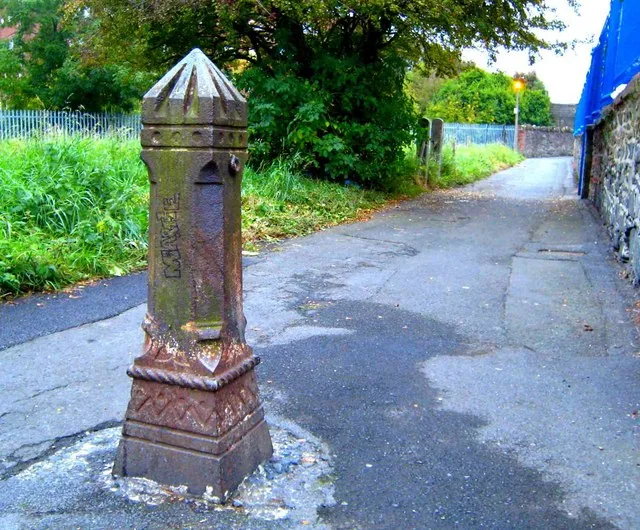
Photo: Ross, CC BY-SA 2.0, via Wikimedia Commons
Most London walks ask you to look up. This one asks you to look down, preferably just after a shower, when the pavement turns to a dark mirror and the city's least-celebrated lighting system switches on. I'm talking about pavement lights: cast-iron grids set with glass prisms, sunk flush into the footway, built to steal daylight from the street and hand it to the basement below.
They are everywhere once you start seeing them — outside old pubs, along the edges of former workshops, in front of Georgian terraces where a cellar once held something useful. The Victorians were brilliant at this sort of quiet engineering. So put the phone away, watch your step, and take a route that begins in Bloomsbury and ends in Clerkenwell, where the basement economy once ran on jewellery, printing and small-scale manufacturing.
Start where the basements are shallow
Begin at the eastern end of Lamb's Conduit Street, near the corner with Guilford Street. This is gentle Bloomsbury: independent shops, old pub fronts, a pavement wide enough to stop and stare without causing a pedestrian pile-up. Walk west, then loop down Rugby Street and back up through Great Ormond Street. The grids here tend to sit in short rows outside former shop cellars and pub cellars — look for the darker iron rectangles interrupting the paving slabs, often with a faint greenish tint where the glass has aged.
The trick is not to hunt for the perfect specimen. It's to notice the pattern. A single row of lights usually means a shallow cellar. A broad grid of six or eight panels suggests a room below — a kitchen, a workshop, a store room. Outside pubs, the lights are often set close to the wall, where the cellar runs under the pavement. Once you've clocked three or four, your eye adjusts and the street starts to look like a circuit board.
How a pavement light actually works
A pavement light is not just a window in the ground. The glass is cut into prisms — usually a grid of small pyramidal or ribbed lenses — which catch low-angle daylight and bend it downwards into the basement. The same prism, working in reverse, can push a weak glow from a cellar lamp up through the pavement at night. That's why they look dull by day and strangely alive at dusk.
The frames are usually cast iron, sometimes galvanised steel, and they're built to take a person's weight. But they're not indestructible, and they're not there for dancing on. Treat them as you would a glass skylight: admire, photograph, don't stomp. In wet weather they can be slick, so sensible shoes are the order of the day.
Reading the marks underfoot
This is the part that turns a pleasant stroll into a mild obsession. Many frames carry raised lettering along the edge: a maker's name, a patent number, sometimes a borough or a foundry mark. You'll see 'LUXFER' on many London examples — the Luxfer Prism company was a major supplier from the late nineteenth century — and 'HAYWARD BROS' on others, a Borough-based firm with a long run in pavement lights and architectural ironwork. Elsewhere you'll spot foundry names, patent dates and the occasional local ironmonger.
Don't expect every grid to be legible. A century of boot traffic, road salt and replacement glass has blurred plenty of them. But when you find a crisp maker's mark, it's worth a pause. It tells you the grid is probably original to the building, and it gives you a rough date. Late Victorian and Edwardian grids tend to be chunkier; interwar examples can be neater and more uniform. If you're photographing, a low angle and a bit of side light helps — a phone torch held almost flat across the frame will pick out the lettering without washing it out.
Cross into Clerkenwell
From Great Ormond Street, head down to Theobald's Road and keep going east. The Bloomsbury leg is about warm-up; Clerkenwell is the main event. Turn up Rosebery Avenue, then cut through to Exmouth Market, where the pavement outside the old shopfronts is a good place to test your new eye. Carry on via Clerkenwell Green and St John's Lane, then loop down to Cowcross Street and Leather Lane.
Clerkenwell's advantage is its history of small workshops. Basements here were not just storage; they were workrooms. Watch for lights set in long runs outside former printers, jewellers and metalworkers, and for the way the grids sometimes follow the line of a cellar wall rather than the shopfront above. On Leather Lane, the market clutter makes it harder, so go early morning or after the stalls have packed up. Cowcross Street is best at dusk, when the pubs and restaurants below street level start to switch on and the pavement begins to glow from underneath.
Timing, weather and pavement manners
This walk is at its best in the hour after rain, when the glass holds a thin film of water and the prisms sharpen into little lenses. A grey afternoon works better than hard sun, which flattens everything. And dusk — especially in November and December, when the basement lights come on before the sky gives up — is when the two-way trick is most visible: you see the street reflected in the glass, and the warm blur of a room below.
A few practical notes. Don't block busy pavements while crouching for a photo; step to the edge and keep moving. Don't test the glass with your heel. And remember that many of these lights sit above working cellars, so a flashgun aimed downwards is both useless and a bit rude. A quiet phone shot is plenty.
The route at a glance
Allow about ninety minutes for the full Bloomsbury-to-Clerkenwell leg, or two hours if you're stopping to photograph every maker's mark. Start at Russell Square or Chancery Lane and finish at Farringdon, which gives you easy trains and a choice of pubs. The Lamb on Lamb's Conduit Street is a good starting-point pint; the Betsey Trotwood on Farringdon Road is a decent finish. In between, keep your eyes on the pavement — not because it's uneven, but because London has left you a lighting rig to walk on.