No Light, All Air: A Walking Trail Through London’s Sewer-Vent Lamp Posts
Photo: Mick Garratt, CC BY-SA 2.0, via Wikimedia Commons
London has a genius for making infrastructure look like something else. Telephone boxes became design icons. Power stations became galleries. And on quiet corners from Highbury to Hackney, a set of Victorian sewer vents have spent more than a century pretending to be lamp posts. They are not lamp posts. They have no bulb, no glass, no switch. What they have is a crown-shaped cap and a job: to let the city breathe.
The nickname is unfair. ‘Stink pipes’ makes them sound like a prank, but these columns are part of the same sanitary revolution that gave London its sewers, its embankments and its habit of solving a crisis with cast iron. They are also, once you start noticing them, strangely beautiful: fluted shafts, bolted bases, a little crown on top like a finial that got above itself. They are the honest monuments of the city’s plumbing.
The Victorian logic of the thing
After the Great Stink of 1858, London built sewers on a scale that still shapes the city. But a sealed sewer is not a safe sewer. Gas builds up. Pressure finds a way out through drains, cellars and basements. So engineers put vertical pipes at intervals to vent the system above head height, where the breeze could take the worst of it away.
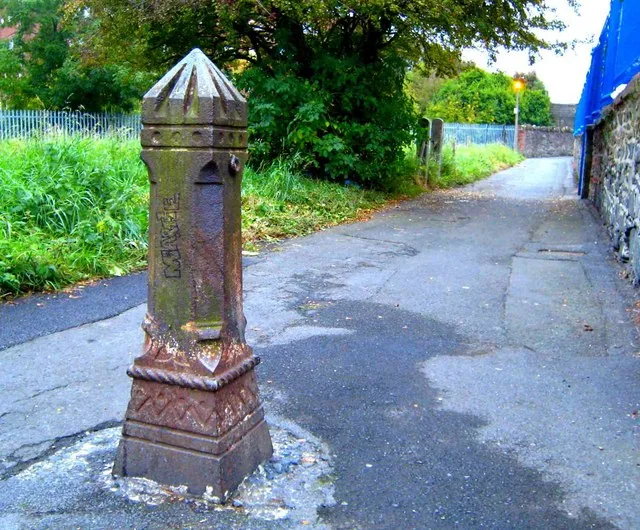
The crown cap is the giveaway. It is a perforated metal top that lets gas escape while keeping rain, debris and small boys out. The lamp-post shape was partly aesthetic and partly social: a plain pipe in the middle of a pavement looks alarming, while a piece of street furniture looks like it belongs. Most were painted black or dark green and left to do their work. Some were later repainted, moved, replaced or quietly abandoned. The survivors are not a formal heritage trail. They are a treasure hunt.
How to spot a fake lamp post
First, look up. A real lamp post has a lantern, a bracket, a glass box or a modern LED head. A sewer vent has a crown: a small, slotted cap that looks like a metal hat. The shaft is usually fluted, with a wider base bolted to the pavement. There is often no door, no cable and no council sticker. It may have small foot rungs or a ladder loop near the bottom, though not always.
Second, check the height. Many sit slightly shorter than a conventional lamp post, especially in residential streets. They are tall enough to clear a horse and cart, but not so tall that they need a maintenance crane. Third, look at the setting. They like park railings, school walls, hospital edges, old terraces and junctions where several drains meet. If you see a lamp post with no lamp and a crown, you have found one. If you see a lamp post with no lamp, a crown and a faint smell on a warm day, you have found one that is working.
The walk: Highbury Fields to Clissold Park
Start at Highbury & Islington station and walk north-east to Highbury Fields. This is a good warm-up because the park edges give you long sightlines. Scan the railings on the north side, especially where the path meets the tennis courts. The point is not to tick off an exact address; it is to train your eye. Once you have seen one crown, the others start to appear.
From the Fields, cross towards Canonbury Square and take the side streets rather than the main road. Look at the corners where terraces meet, and at the walls of the older school buildings. There is a fine survivor near a school gate in this area, tall as a maypole and painted the same green as the railings. You cannot go in, but you can see the crown from the pavement. It is a good reminder that these pipes were never hidden away. They were part of everyday life.
Follow Canonbury Road towards the New River Walk. The walk itself is a narrow ribbon of water and greenery, and it slows you down in the right way. Keep an eye on the edges where the path meets the streets. This is a good place to recalibrate: look for the absence of a lantern, the presence of a cap, the little shadow that a crown throws on a grey November morning.
Carry on to Clissold Park. The park is full of street furniture, which makes the sewer vents harder to spot, but the reward is a proper Victorian ensemble: railings, gates, a church spire and at least one column that has been mistaken for a lamp post by generations of dog walkers. End at Stoke Newington Church Street for a coffee. You have walked a little over two miles and looked at maybe half a dozen survivors. That is enough for one day.
The lexicon
People who notice these things tend to name them. The Crown is any pipe with the full perforated cap. The Bishop is the taller, more pointed one that looks like a hat. The Silent Lamp is the general term for a column that has been painted to match the street lights. The Iron Tree is one that has been swallowed by ivy or buddleia. The Sentry is the one by the school gate, standing to attention. The Breather is the affectionate name for any of them on a cold morning, when you can almost believe you see the city exhaling.
Some have been repurposed in small ways: a bike lock, a lost-pet poster, a meeting point. ‘Meet you at the crown’ is not a phrase you will hear often, but it should be. These pipes are already landmarks. They just lack the plaque.
Why they matter
London is good at grand commemorations. We have statues for generals, plaques for poets, monuments for disasters. The sewer vents commemorate something less glamorous and more important: a municipal decision to stop cholera. They are not beautiful in the way that a cathedral is beautiful. They are beautiful in the way that a well-made tool is beautiful. They are also quietly ludicrous. A lamp post that never lights. A column with a crown and no king. A piece of the city’s digestive system dressed up as street furniture.
Go on a dry weekday morning, when the traffic is low and the paintwork has a chance. Take the Overground to Highbury & Islington and leave from Canonbury or Stoke Newington. Do not climb them. Do not expect a museum label. Just look up, find a crown, and give the city a nod. It has been breathing through these things for more than a century.