The Shadow Ledger: A Sundial Walk from the City to Bloomsbury
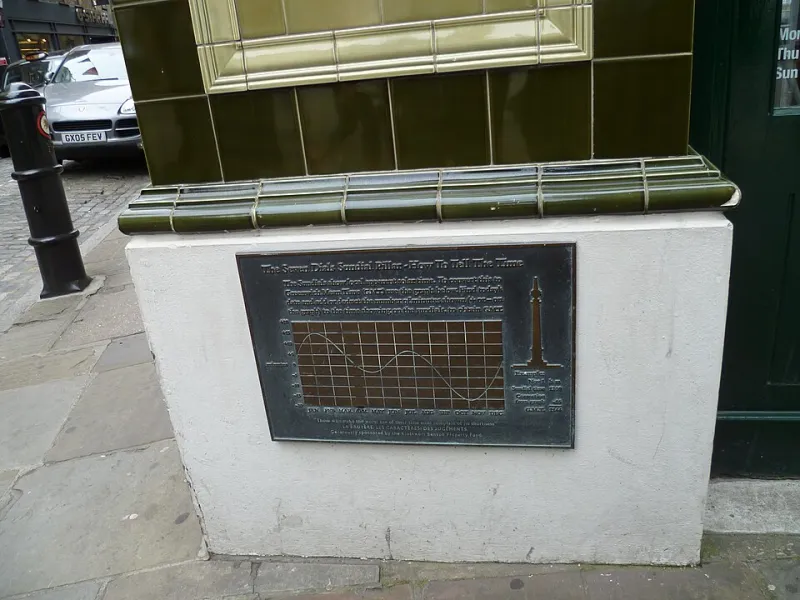
Photo: Philafrenzy, CC BY-SA 4.0, via Wikimedia Commons
London has two clock networks. One is the phone in your pocket, endlessly corrected. The other is older, quieter and bolted to walls: the city’s public sundials. They are on church flanks, above doorways, in garden squares and on one very famous Covent Garden column. Most of us walk past them every week without ever looking up.
This is a half-day route from the City to Bloomsbury that treats those dials as the point, not the backdrop. It is about two and a half miles at an unhurried pace, with stops for benches and a pint. The trick is timing. On a clear November day the sun stays low, shadows are long and legible, and the best window is roughly 11am to 1pm. Solar noon in London in mid-November falls around 11.50am, not 12pm, so do not wait for the clock to agree with the sky.
First rule: look up, then look sideways
A sundial is not always a decorative circle with Roman numerals. Sometimes it is a scratched line on a south-facing wall, a triangle of metal above a door, or a patch of stone that has been repainted so many times the numbers have gone soft. The giveaway is the gnomon: the raised edge or rod that throws the shadow. Find that first. The dial face is just the page the shadow writes on.
Start at St Sepulchre-without-Newgate, near Holborn Viaduct. The churchyard is usually quiet, the traffic is a dull roar rather than a wall of noise, and the south wall gives you a gentle introduction. The dial here is modest and easy to mistake for a memorial plaque, which is exactly the sort of thing this walk is designed to fix. Stand back, find the gnomon, and watch where the shadow lands. If it falls nowhere near an hour line, you are either too early, too late, or looking at a dial that only works for part of the day. All three are normal.
From there, head west along Holborn. St Andrew Holborn is another good place to train your eye. Church walls in the City are palimpsests: notices, monuments, soot, repairs and clocks all competing for the same surface. A sundial can look almost accidental. That is part of the pleasure. These are not museum objects behind glass. They are outdoor instruments that have been rained on for centuries.
The Seven Dials pivot
Cut south towards Covent Garden and the walk changes gear. Seven Dials is the motherlode: a stone column at the meeting point of seven streets, carrying six sundials on its shaft. The column was built in the 1690s and has been restored more than once, but the idea is still intact. You are meant to read the time from the dials as you approach from different directions.
Walk around the column slowly. Do not expect all six faces to agree, or even to be in sun. A vertical dial only works when the sun is on its side of the building, so some faces will be in shade while others are doing the work. This is the best place on the route to understand why sundials are fussy creatures: they are not clocks, they are local instruments. They tell solar time, which drifts from clock time by a few minutes, and in summer by a full hour when British Summer Time is in force. In November, the gap is smaller but still there. If a dial reads a quarter of an hour ahead of your phone, the dial is not broken. It is simply older.
Seven Dials is also a good reminder that a sundial safari is not a sprint. The surrounding streets are busy, the pavements are narrow, and the column is a meeting point for half of London. Buy a coffee, stand back, and let the place do its thing. The best view is not from directly underneath but from one of the street corners, where the column shows its full height and the dials catch the light.
Bloomsbury’s scholarly shadows
From Seven Dials, head north-east via Shaftesbury Avenue and New Oxford Street, then slide into Bloomsbury. This is where the walk becomes a lesson in looking at institutional walls. The British Museum’s neighbourhood is full of south-facing facades, and wall dials turn up in the least theatrical places: above doorways, on the flanks of churches, on buildings that look more like offices than observatories.
St George’s Bloomsbury is worth a circuit. The church is a strange, beautiful thing, and the surrounding streets are quiet enough to pause without being in anyone’s way. Keep an eye on the south wall and the neighbouring buildings. Some dials are painted; some are carved; some are small enough that you will only notice them because you are already looking. That is the accumulated effect of a morning spent hunting shadows: your eyes adjust.
Bedford Square is the natural place to slow down. The central garden is private, so do not go climbing railings or pretending to be a resident. The pavement is public, the plane trees are good, and the square has that Bloomsbury hush that makes you want to lower your voice. Russell Square is more open, with benches and a fountain, and Queen Square is quieter still. These are the places to sit with a notebook and work out what you have actually learned: that a south-facing wall is a clock, that a shadow is a hand, and that London is full of timepieces that do not need charging.
Where to stop
The pubs on this route are not incidental. The Princess Louise on High Holborn is a Victorian interior worth seeing even if you only have a half. The Lamb on Lamb’s Conduit Street is a proper Bloomsbury pub with a good corner for a late lunch. The Museum Tavern opposite the British Museum is busier but useful if you are ending there. The Perseverance on Great Ormond Street is smaller and quieter, which suits the mood of the walk.
For benches, Russell Square is the most reliable. Bloomsbury Square has a few, and Queen Square is a good bet if you want to eat a sandwich without competing with a tour group. In Covent Garden, the churchyard at St Paul’s is a decent pause, but it is not quiet. Save your sitting for Bloomsbury.
Practical notes
Wear shoes you can walk in, bring a small torch if you are starting late in the day, and do not expect every dial to be visible from the pavement. Some are on private property; view them from the street and move on. If a church is locked, that is fine: the dial is usually on the outside, which is the whole point.
The route works best on a bright, cold day when the sun is low and the shadows are sharp. If it is overcast, go anyway. You will see the dials as objects rather than instruments, and that is a different pleasure. The city is full of clocks that ask nothing of you except that you look up. This walk is simply a way of doing that on purpose.